
‘Colours of Time’ – the touching story of two French women at the turn of the 19th century
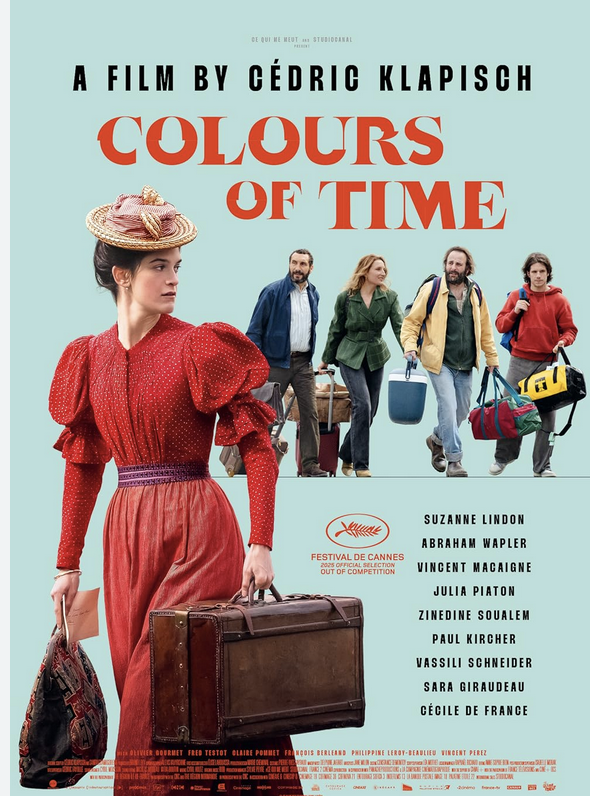
A set of very distant cousins learn through a genealogist and a solicitor that they are the heirs of a long-dead ancestor, Adèle – a woman born in the French countryside at the end of the 19th century, who has left behind a house now abandoned and a large piece of land, coveted by a real estate developer. The heirs, who have to make the decision of what to do about the inheritance, embark on an adventure of discovery, visiting the modest old home and exploring what they find. Cédric Klapisch (“The Spanish Apartment,” “Rise,” “The Russian Dolls”), director and co-writer of "Colours of Time," intertwines with great sensitivity the contemporary and old tales, revealing layers upon layers of the life of Adèle, and of her lost mother.
The cousins, sorting through old photos, letters, and paintings, start to investigate the life of this ancestor they knew next to nothing about and who puzzles them. Why did she leave the comfort of her life in the country to go to Paris by herself? They find photos of Adèle and maybe of her mother, signed by Félix Nadar (a very famous photography pioneer), and a painting that looks much like an early Impressionist work. Klapisch provides answers, creating a dance between the two periods, sliding from one era to the next, sometimes in the same location—in Paris, this is easily done and completely charming.
As we discover Adèle, her bravery, and her challenges, the cousins have their own struggles in the current period, navigating their own lives. The themes that Klapisch likes to touch upon – love, feminism, societal dynamics – are all present in this movie, with the different perspective created by the historical context. Adèle and her mother are the two real feminist heroines of the film. The mother even more so: a woman who aspires to freedom in a time when that was not at all an option for women from a humble background. She conquers it, but at a great price. Her courage and her inner beauty give rise to some of the most emotional moments of the film. Her daughter also has this strength, but she benefits from what an education can provide to a woman in the years following the First World War.
The actors, the scenery, and the fluid, fast rhythm contribute to achieving a light and charming film with deeper undertones. Those interested in the transformations happening in the Western world around the beginning of the 20th century will enjoy perusing the “who’s who” of the time, the discussions about the usefulness of painting at the emergence of photography, and the relations between men and women in a changing world.
"Colours of Time" will be presented for at least one week at the Orinda Theatre starting on April 24. More information at www.internationalshowcase.org, or on the theater’s site: Orindamovies.com
Copyright 2026, Lamorinda Weekly