
Lafayette council discusses new objective design standards
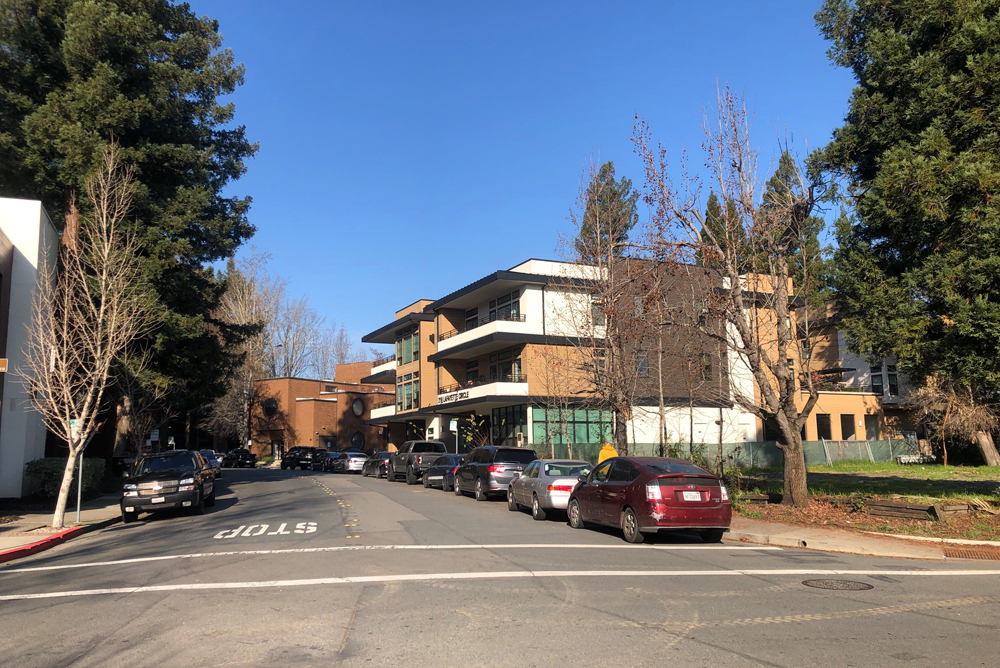
Lafayette Senior Planner Alry Cassidy introduced Objective Design Standards (ODS) to the City Council during its Jan. 12 meeting, before turning the presentation over to Monica Szydlik, Senior Associate for Lisa Wise Consulting. Design standards regulate the design, architecture, and layout of a site and building. Recent state law now requires that certain development applications be reviewed using only objective standards.
Lafayette’s ODS Phase 1, adopted in 2019, created priority standards to address the building height, scale, and design, pedestrian access, and outdoor space, among other priorities, and was implemented through the ODS form. In December 2024, Lafayette’s 6th Cycle Housing Element was adopted, and in January 2025, the city adopted Ordinance 696. Ordinance 696 approved a Zoning Text Amendment and a Zoning Map Amendment to rezone certain areas, though this did not include modifications to the ODS form, focusing on objective development standards, rather than design.
The purpose of Cassidy’s presentation was to present the new draft of ODS Phase 2 for the City Council to review and offer their feedback. ODS Phase 2 plans to create detailed, predictable design standards, which will apply to multi-family, commercial, and mixed-use residential development.
“After the council and public make feedback to staff, staff will make updates as directed and return to council with an adoptable draft,” Cassidy said in the meeting. “No action is required to adopt this ODS draft, as it is an implementation step of the housing element, which has already been fully analyzed by CEQA (California Environmental Quality Act).”
The council and several members of the public provided feedback about ODS Phase 2, with a significant portion of the discussion focusing on the roof forms and height. The council pushed for stronger requirements mandating pitched roofs on buildings over two stories, which could include a mansard-style roof that mimics a pitched roof at the building’s edges, but hides the flat roof behind it where equipment can be placed.
The council also had concerns that the draft standards would allow for too much low-quality material usage. They objected to the standard allowing up to 70 percent of a façade to be stucco and concrete, and requested the standards be capped at the combined total of stucco, concrete, and concrete block at a lower percentage.
There were also some concerns about the building massing and articulation, which is the three-dimensional, detailed design of a building’s exterior surface. Council Member Susan Candell argued that the articulation options need to be “substantial,” as it allowed for elements that were temporary or lacked architectural heft. Candell also requested that one item previously removed from the Planning Commission draft be added back to avoid boxy, massive, and flat homogenous structures.
The council requested that staff emphasize the city’s mission statement and purpose, and asked staff to include a topic sentence that mirrored the mission statement, to underscore what they are looking for. They also requested that staff develop a booklet or web page containing visual examples of design standards for developers to view.
Many of the public comments were critical of the draft ODS, largely stemming from fears that the new standards would destroy Lafayette’s character. A majority of the feedback focused on preserving the city’s semi-rural character, with residents worrying that the draft standards failed to uphold the city’s mission statement to make Lafayette a “small-town community with a semi-rural ambiance.” Specifically, many addressed a desire to not look like Walnut Creek.
One resident, Eliot Hudson, submitted a video presentation, which several other residents supported, with a detailed revision of the draft standards. The video included specific technical demands, including banning flat roofs, arguing against the allowance of 60% glass coverage, and the use of 70% stucco or concrete materials.
While a large majority of the public pushed for stricter aesthetic standards, Chair of the Design Review Commission Glenn Cass spoke as a resident to offer a counter-perspective. Cass warned that for six-story buildings, there was no “semi-rural” style, and that completely restricting flat roofs would lead to developers requesting waivers, and noted that the strict mandates would increase costs, considering the affordability aspect of the mandates.
Staff will proceed with revising the draft standards based on the council and public’s feedback, before returning to the Planning Commission and then the council for a final review.
Copyright 2026, Lamorinda Weekly