
Moraga and Orinda awarded $508K grant for Moraga Way Safety Study
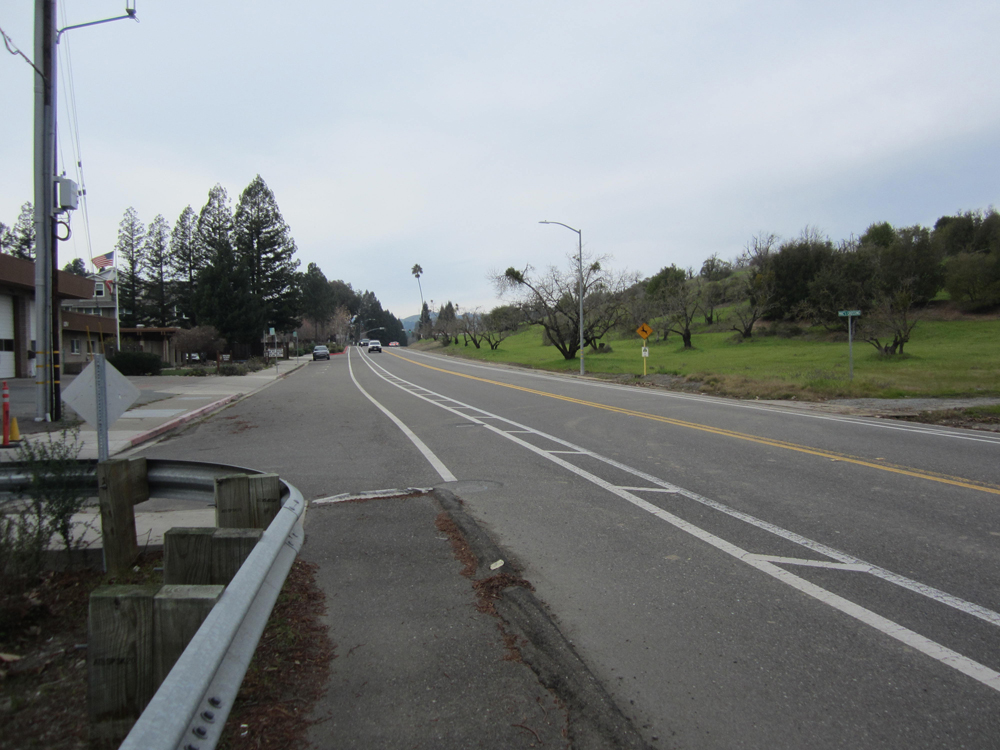
The Town of Moraga and the City of Orinda are joining forces for the Moraga Way Safety and Connectivity Planning Study. To that end, both municipalities are sharing a $508,000 federal Safe Streets and Roads for All (SS4A) Planning and Development grant.
The study is meant to evaluate the 4.7-mile Moraga Way corridor that stretches from Moraga Road to the Orinda BART Station to develop a community-informed corridor concept meant to improve safety and connectivity for walking, cycling, driving and transit. It is a planning study only. It does not include final design or construction.
The architect of this plan, retired Moraga Public Works Director/Town Engineer Shawn Knapp, intended this shared-use path to also function as an emergency access lane during disasters, allowing emergency responders to reach affected areas when regular roadways are congested.
“I was very happy to receive the news that the joint Town of Moraga and City of Orinda had been awarded the SS4A planning grant for analyzing feasibility to construct multi-use regional trails along Moraga Way,” stated Knapp. “In times of emergency, the regional trails could be used for emergency vehicle access (EVA). An example of EVA in Moraga is that portion of the Lafayette-Moraga Regional Trail between the Canyon Road Bridge and Westchester Street in the Moraga Country Club (MCC). It was designed as an EVA because of the MCC singular public access along St. Andrews Drive.”
Knapp first began developing the concept in 2018, after completing the Moraga Way Improvement Project which provided a myriad of safety improvements including new street pavement, bike lanes and sidewalk/pathways within the project’s budget limits. However, he felt that “more Moraga Way safety improvements were greatly needed in consideration of wildfire and other emergency evacuations, transit, localized congestion, safety for school children using the roadway to get to and from schools, alternative methods for commuting, and viable and safe trails for general recreation for families. To get there, I had envisioned interconnecting the existing Lafayette-Moraga Regional Trail with the construction of additional trails to criss-cross Moraga. The Moraga Way Regional Trail project would be the starting point with Camino Pablo and Moraga Road as possible next candidates for trails.”
“Resident safety is our top priority,” said Moraga Mayor Kerry Hillis, “and this funding is a critical first step toward a safer Moraga Way for everyone, whether you walk, bike, drive, or take transit. This study will help us evaluate a protected shared-use path and other practical safety improvements along a key connection to BART, while also exploring how the corridor can better support emergency response and evacuation when it matters most. Just as important, this work reflects the strong partnership between Moraga and Orinda, as meaningful progress on Moraga Way depends on planning together across city boundaries.”
Orinda Mayor Brandyn Iverson stated, “This project reflects a forward-thinking approach to how Orinda and Moraga plan for the future. It addresses congestion and safety on a road that cannot be widened, by giving residents more ways to move within their community that are safe and easy to use. Moraga and Orinda are closely linked by our shared dependence on this corridor, and meaningful progress means reimagining it as a place that works better for everyone, supporting everyday mobility, strengthening resilience, and enhancing quality of life.”
Iverson added, “Both congestion on Moraga Way (and its safety issues for people walking or biking) and evacuation concerns are two of the biggest challenges we face. Getting a grant that is meaningful enough to do a feasibility study means we can get started right away on what is going to be a long process, but one that could make a real difference to our residents.”
“The success of obtaining the Moraga Way SS4A Study Grant was based on the extensive partnership and collaboration of the Lamorinda City and Town agencies, as well as the great technical support from Contra Costa Transportation Authority,” explained Knapp. “Additionally, a number of agencies wrote supporting letters for the project including Moraga-Orinda Fire District, District 2 Supervisor Candace Andersen, United States Congressman Mark DeSaulnier, and State Assemblyperson Rebecca Bauer-Kahan.”
Added Knapp, “I have completed so many different projects in Moraga during my engineering career. I look back proudly and feel that I have made a difference. Now, if the Moraga Way Regional Trail project is one day constructed, it would be my pinnacle of conceived safety projects for the community.”
Copyright 2026, Lamorinda Weekly