
Muddling through the intricacies of mudding
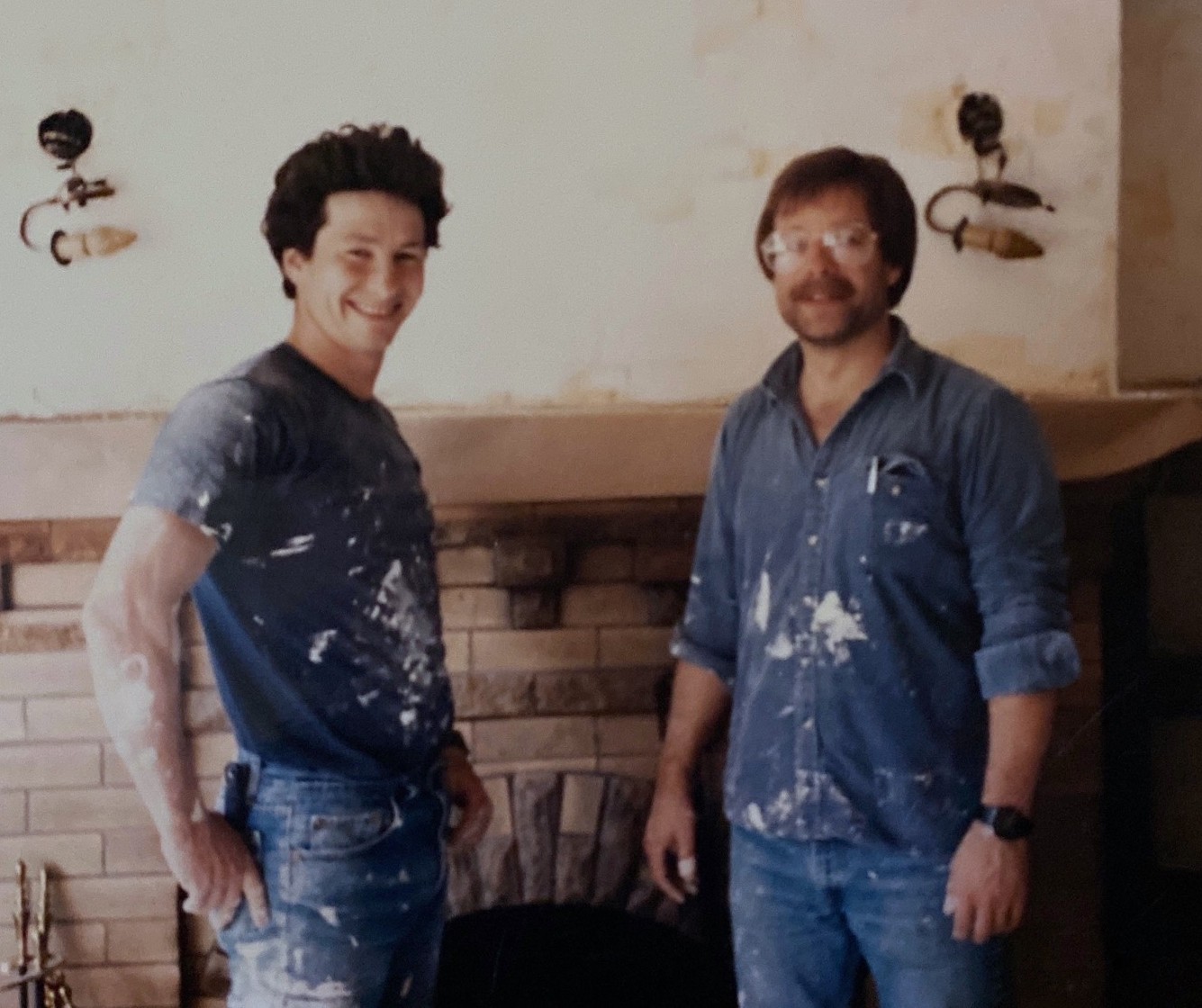
Last year a client called to ask if I could patch several holes in their walls. The home was recently updated with new flooring. Their contractor removed and replaced the old baseboards but not the doorstops attached to them. Enter the Handyman to install new doorstops and patch several fist-sized holes in the sheetrock behind doors where the uninhibited knobs had banged into the walls.
Spackling nail holes from picture hangers is a very easy DIY. Bigger holes are not as easy, unless you don’t care what that wall looks like after it is patched. When doesn’t it matter? Patching a hole or crack in your garage wall, or behind the refrigerator or a bookcase, or in a closet; the finished surface does not matter much because no one ever sees it. These are prime locations for a beginner to practice patching sheetrock and learn to match texture.
Patching a large area requires texturing compound – a.k.a. “mud” – which comes in boxes or buckets. I buy the “joint compound” in buckets. It is heavier mud for filling holes and gaps, but you can mix water into it to thin it for texture coats. Be prepared to waste a lot of mud. Even if you are only fixing a small hole, buy a small bucket of ready-mixed mud. Taping and smoothing a whole wall or ceiling will need a five-gallon bucket of mud.
An alternative to ready mix is fast-setting mud called “hot mud” by the pros. Fast-set powder comes in bags, mixes with water, and dries very quickly. The bags are rated by their working time: 5, 20, and 40 minutes. While using hot mud can shorten time between coats, if you’re not fast enough, it will turn into a rock in your pan. Hot mud is probably better left to a more experienced hand.
Before you start, the following tools are essential for a good finish. A mud pan (a long narrow trough for holding the mud) is a must. There are two types of pans, plastic or steel. I buy steel because it makes a satisfying scraping sound when I clean my blade on the rim. (It’s the little things in life.)
Also, get taping knives in a few sizes. A taping knife is a wide blade with a handle, like an overgrown putty knife. Different sizes are for different jobs. A narrow blade mixes mud in your pan and fits in narrow spaces. A six-inch blade is for taping seams. Then a twelve- or fourteen-inch-wide blade is for smoothing broad areas. Stainless steel blades stay straighter and last longer but cost more. Less expensive blades will work for occasional home use if you don’t want to over-invest in this endeavor.
You might also try a wall patching kit. Most of these include a sticky fiberglass mesh that sticks to the wall around the hole and then is covered with mud. What the easy-to-follow instructions don’t tell you is that you will be left with a raised 1/16-inch-thick bump on the wall. To get rid of that bump, professionals do what is called “feathering,” spreading mud over a much wider radius from the hole until it looks flat. Being generous with mud is a good thing.
Instead of a patching kit for a large hole, I cut out a piece of the surrounding sheetrock and screw on a replacement piece. Then tape the seams and texture the area to make it match the rest of the wall. This brief description foreshadows my next column about repairing sheetrock.
Patches that look good take time since it is an iterative process. In other words, be patient. Apply your mud in several coats, allowing the area to dry completely, usually overnight. If you want to speed up the drying process, you can aim a fan at the area to dry the mud quicker.
Finding your skill in spreading mud takes time and practice. Be prepared for falling mud. Spreading mud on walls and especially ceilings involves gobs of mud hitting the floor. That’s okay because splattered mud can be cleaned up with water. To save clean-up time, you can spread a drop cloth to catch your splatters but be prepared to see mud hit the floor. Remember: Only use fresh mud in your pan, never re-use mud that has hit the floor. Don’t rush your mudding: Smaller amounts on your blade reduce the amounts that squidge out the sides and hit the floor.
I recently gave a client all this information and a demonstration with some coaching. They wanted to smooth the texture in a bedroom. I asked later how that went and they replied, “When can you come finish it?” While the texturing technique can be a challenge to learn, the satisfaction of a beautiful patch can be very rewarding.
Copyright 2026, Lamorinda Weekly