
Therapy dogs are being utilized at more unique locations, like at this Lafayette dentist's office
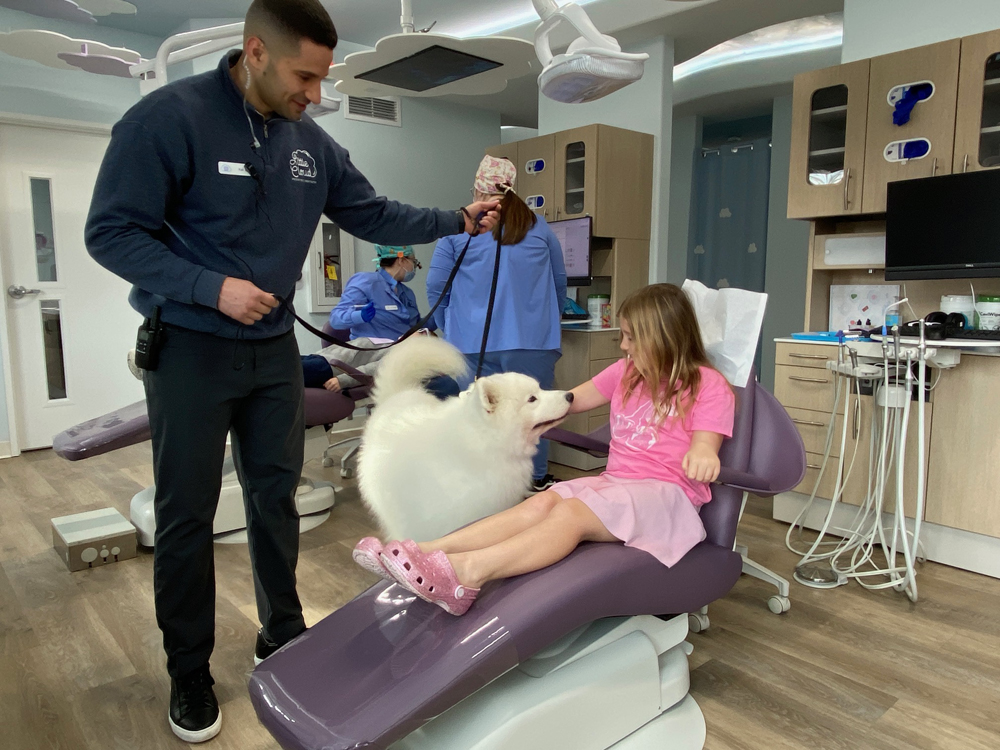
If one big fluffy dog isn’t enough to reduce anxiety, how about two?
For patients of Dr. Rachel Forer at Little Cloud Pediatric Dentistry in Lafayette, it is plain to see that Pearl and Onyx, a pair of Siberian Samoyeds, known for their incredibly loyal and gentle, friendly temperament and their signature fluffy white “cloud-like” coats and perpetual smiles, have certainly made going to the dentist a far more enjoyable experience.
“Before you go to the dentist, you’re not looking forward to it but then when you know the dogs are there, I know it’s going to be more fun and I look forward to going,” said 11-year-old Claire Diestel, who with her sister, Lexi, 6, have been patients of Dr. Forer since 2024.
Support dogs are increasingly becoming a more common sight in once unexpected environments as their advocates point to the emotional well-being they provide based on mounting research.
It’s not just high stress places like court rooms where individuals, particularly children, wait to recount traumatic situations that support dogs are finding their worth. Fire houses and police stations as well as places where isolation exists for individuals, like nursing homes and hospitals, and even library settings for young readers are finding pet therapy beneficial. The unconditional love of a four-legged creature brings joy and confidence.
An article in Psychology Today entitled “The Healing Power of Paws,” updated in July 2024, looked at the mental health benefits that dogs offer humans – from their visitation in hospital wings to their presence in therapy rooms.
“Scientific evidence underscores the numerous benefits of canine companionship for reducing anxiety, highlighting the unique bond between humans and dogs as a powerful tool for emotional healing. Whether through physical touch, regular exercise, or social interaction, dogs provide a multifaceted approach to alleviating anxiety, making them invaluable companions in the journey toward mental well-being,” the piece concluded.
Julie C. Bond, M.S., a Certified Animal Behaviorist and a member of the National Association of Animal Behaviorists (NAAB) board, echoed these findings having seen an evolution of increased awareness in her more than 40 years working in pet assisted therapy services.
She recalled in the 1980s as a graduate student at UC Davis how it was like pulling teeth to just bring animals into the university’s preschool to examine the effect of animals have on individuals in school settings.
Decades later, Bond, who noted even Sigmund Freud saw the therapeutic benefits of dogs, has certainly seen a change in attitude with more places being receptive to what animals offer.
“It is definitely a growing industry,” she said as the settings visited now range from men’s and women’s jails to libraries and skilled care and senior memory facilities. In her role with the South Bay-based Furry Friends, she and her dog make periodic visits with residents at The Kensington in Walnut Creek in its living room, library and game room and memory area.
Animal-assisted therapy has been part of Dr. Rachel Forer’s practice since it opened in December 2024. In fact, integrating a therapy dog into the office was something she intentionally planned long before opening Little Cloud Pediatric Dentistry’s doors.
“We approach this thoughtfully and respectfully,” she said, explaining how new patient families complete a questionnaire that gauges their child’s comfort level and interest in meeting our therapy dog, and consent is always obtained prior to any interaction.
“Our goal is to provide an additional layer of comfort and positive reinforcement in a way that feels supportive and appropriate for each child,” Dr. Forer continued.
Pearl and Onyx are led individually into the treatment area to greet patients and their parents by Dr. Forer’s husband, Kaled, a certified handler. He is the designated handler for Pearl, a certified therapy dog through 4Paws Inc., and Onyx is currently in training. Both dogs hold AKC Canine Good Citizen titles. Pearl is an AKC Champion, and Onyx is an AKC Grand Champion.
But not all dogs are cut out for this unique role, acknowledged Dr. Forer, who noted temperament is essential.
“A therapy dog must be naturally calm, stable, and non-reactive in a variety of environments,” she said. “My husband, Kaled, and I have trained Pearl since she was 10 weeks old, and her steady demeanor around children and adults alike became evident early on.”
Animal-assisted therapy is a well-studied and evidence-based behavior guidance modality in pediatric dentistry. Research supports its role in reducing anxiety, improving cooperation, and fostering positive healthcare experiences for children.
“Incorporating it into my practice aligns with my philosophy of creating a nurturing, child-centered dental home,” said Dr. Forer.
Both Lexi and Claire are sold on the cuddly and loving support Pearl and Onyx serve up each visit.
“I like having them there because if I’m nervous, they help calm me down,” Lexi said.
“The dogs make it a pleasant experience (and) makes them want to come to the dentist,” said Claire and Lexi’s mother. “It’s a winning combination. You know it is all love.”
Copyright 2026, Lamorinda Weekly