
Summer Seasonings
“August is one of the hottest months of the northern year…’twixt the flower and the fruit.” ~ Hal Borland, Naturalist and Author
It has been a warm summer with August scheduled to bring on the heat. The hot days of this month showcase my seasonal favorite flowers.
The Naked Ladies are back! When the calendar page flips to August and the days are long and hot, these gorgeous Amaryllis belladonnas shoot their bare stems skyward. Their fragrant, trumpet-shaped flowers in various shades of pink are the highlight of my summer garden. At the end of spring, the lush emerald foliage dies back to the bumpy bulbs on the ground, waiting until the heat of August to stretch their “naked” necks. In Italian, belladonna translates to “beautiful woman,” and these nude lilies do not disappoint as the perfect summer stunner. They are South African natives, requiring six hours or more of sunshine and minimum moisture, which makes them perfect for our dry climate. Resistant to deer and rabbits, yet attractive to butterflies and hummingbirds, these August hotties dance in the breeze on my hillside and beyond.
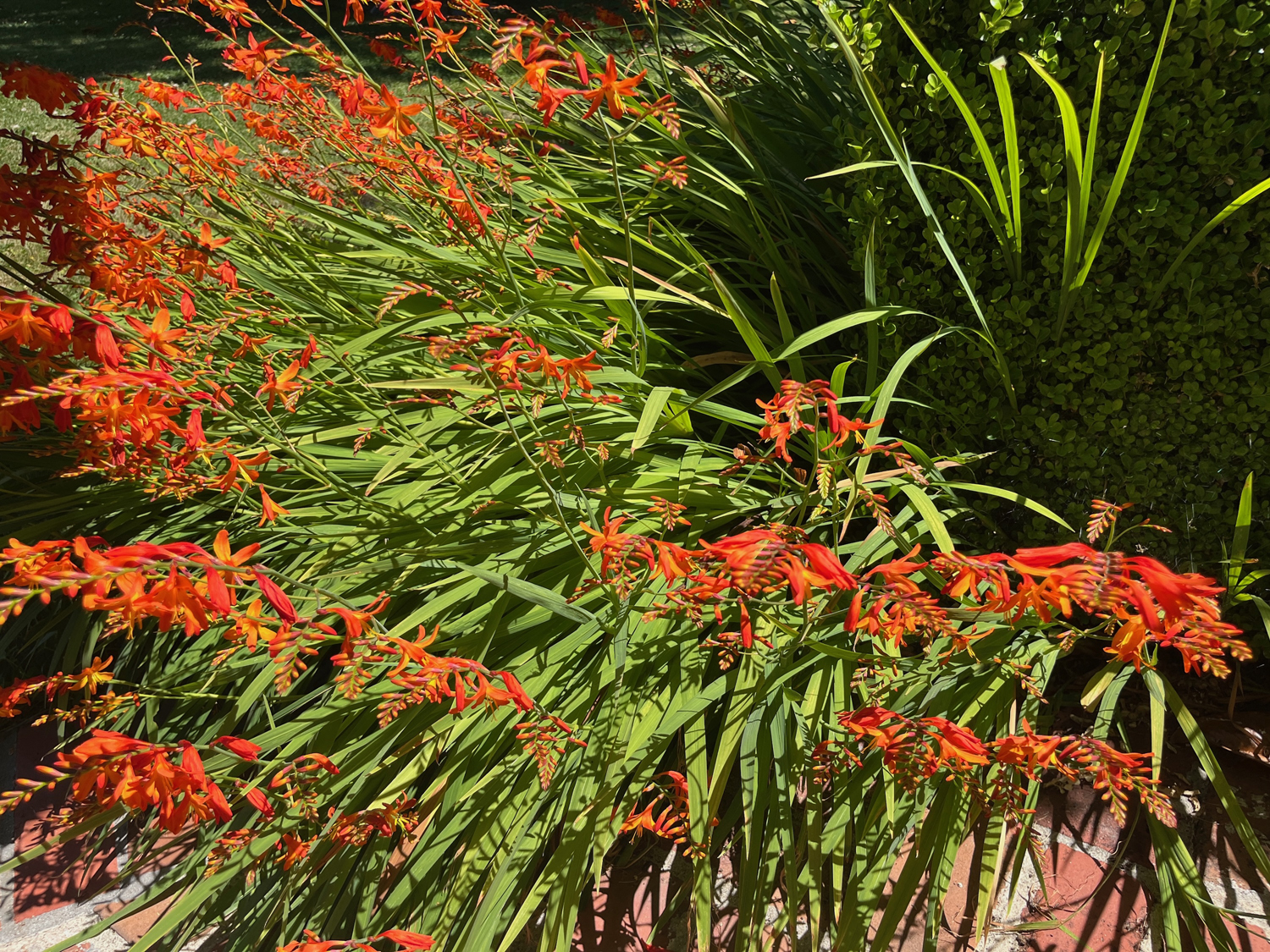
Also hailing from South Africa, a terrific terrace choice is the firecracker flower Crocosmia. Called falling stars or coppertips, the orange and yellow trumpet-shaped flowers open in succession from the bottom up with slender, strap-shaped foliage like gladiolus. I dig and divide the corms every three years because when they get too crowded, blooms are sparse. Since they are also not a desired deer dinner, I will add corms to my hillside where the herds congregate. Plant in full sun in humus-rich, well-drained soil for the best results and enjoy watching the pollinators flock to the flowers. Clay soil will need to be amended.
Sword lilies, part of the iris family, are known best as gladiolus. Corms are planted with the pointy side facing up in moderately fertile soil in areas that receive six to eight hours of sunlight. Since they grow to four or five feet with blooms of three to five inches across, gladioli complement shorter plants when planted at the back of a bed. These tall plants often need staking to stay upright. Colors include purple, pink, red, orange, lime green, white, and even variegated varieties. South Africa again deserves a shout-out for originating these glorious bloomers.
Brazil makes an entrance with an incredible specimen, Jacobina. Many years ago, I snipped a stem from my grandparents’ garden in Napa Valley. I plopped it in a container, and much to my delight, it survived and thrived. Jacobina is aptly called Brazilian Plume Flower or Flamingo Flower, as this sturdy, upright evergreen produces large, dark pink tubular flowers that resemble plumage. For years, it was a highlight of my containers, requiring daily watering, yet living happily in a very large patio pot. One day, I cut a stem to plant under my lemon tree where morning sunshine and afternoon shade are plentiful, assuming it would stay small and offer pretty petals as an understory specimen. Instead, Jacobinia shot skyward, and the appealing plumes reached a height of 15 feet. Do not cut off any plumes when the color fades or the flowering withers, as the pink plumes reappear with amazing color in a few weeks. Brazilian Plume flower is a wonderful addition to any container where it will remain small, or a garden bed where it will grow to a gigantic size. Keep in mind that it requires the soil to remain moist, but not soggy. The extra care on this exotic plant is worth it with hummingbirds as their frequent visitors.
The two trees that rock my August days and nights are magnolias and crape myrtles. The magnolia tree is one of the oldest flowering plants in history, with over 200 species. I fell in love with Magnolia Grandiflora years ago when I attended an interior design conference in the deep South. Magnolia Grandiflora grows to be a tall tree, with a height of 60 to 80 feet, and a canopy of shiny, leathery leaves with creamy white flowers that span a foot in diameter. I started with a sapling in a gallon pot, and now that tree supports me swinging in my hammock, watching the squirrels scampering to the Japanese maples and the bees buzzing in the magnolia flowers! The falling leaves of mature trees are messy, requiring consistent raking, so don’t plant your tree near a pond or patio.
When it comes to crape myrtles, this low-maintenance, high-value blooming tree ranks as my number one pick for summer color. Although these trees are native to eastern Asia, they are referred to as the “lilac of the South,” with dramatic flower colors of watermelon, pink, lavender, and white. This dynamite tree requires full sun and naturally grows with multiple trunks. Pruning in late winter is optional for Lagerstroemia, depending on how you want the tree or bush to flourish. Birds and pollinators flock to the trees. I planted watermelon crape myrtles to flank my driveway and positioned two as flamboyant focal points on my patio. The lavender bush crape myrtles in my flower beds are heavily pruned after blooming to keep them small.
Of course, there are many other beloved bloomers in my summer garden, including my radiant roses, but the Naked Ladies, Falling Stars, Gladioli, Flamingo Flower, Magnolia, and Crape Myrtle are August’s hot, hot, hot picks!
Cynthia Brian’s Goddess Gardener Guide for August
- PROTECT your edibles and all garden plants from our dear deer by erecting a fence. Sadly, deer repellents are only mildly effective, while plants that are highly scented or fuzzy won’t keep the stags at bay.
- DEADHEAD your flowers and roses to encourage additional flowering.
- HARVEST summer vegetables and fruits. Asian pears, tangerines, tomatoes, squash, peppers, cucumbers, and blackberries are a few of the delicious edibles ready to eat.
- MULCH is a sunscreen for roots. Add three inches of mulch to retain moisture, stabilize soil, cool the roots, and suppress weeds.
- POUR boiling water on weeds on pathways and driveway cracks to kill hard-to-remove weeds, or spray with 30% white vinegar. I use both!
- DUMP standing water to prevent the mosquito larvae from hatching. According to the CDC, the mosquito is considered the deadliest creature in the world, killing a million or more people each year by spreading malaria, dengue, Zika, and yellow fever. And yes, these diseases are now spread by California mosquitoes.
- THREATS of tick bites are at a nine-year high, bearing numerous illnesses. Apply bug spray containing DEET, wear long sleeves, and check yourself and your pets after gardening, hiking, or being outdoors.
- TURN off your main water valve when going on vacation in case you get a broken pipe.
- SAVE seeds from your favorite perennials, including zinnia, marigold, and echinacea.
- ORDER spring-blooming bulbs that you’ll plant in fall from your favorite catalogs or nurseries. Suggestions include tulips, narcissi, hyacinth, scilla, anemone, muscari, and Dutch iris.
- INSPECT your residence and yard for wildfire prevention. Wildfire resilience begins with neighbors working together. Make sure your Go Bag is ready to roll in the case of evacuation.
- WANT to peek into backyard gardens while you are traveling? Visit https://www.gardenconservancy.org/garden-directory/open-days to find gardens that participate in allowing visitors. The cost is $5 for members and $10 for non-members.
- WATER deeply in the early morning or evening to avoid evaporation.
Happy Gardening! Happy Growing! Stay cool in the hot August days and nights!
Copyright 2026, Lamorinda Weekly