
Wildfire inspections and other preparations heat up in Lamorinda
For the past few months, Moraga and Orinda residents whose property did not comply with fire codes were sent pre-citation notification mailings emblazoned with the words “Notice of Violation Open Immediately” in red on the envelope. The Moraga-Orinda Fire District took the guesswork out of the infractions by providing photos of the violations that needed correcting. The missives stated, “Failure to correct the violations listed below within 30 days from the date of this letter will result in the issuance of an administrative citation and $100 fine. Continued failure to comply with the fire code may result in the issuance of additional citations and increasing fines.”
The initial inspections were done in various neighborhoods. For the month of June, MOFD counted 1,266 code enforcement violations in one neighborhood. A different neighborhood inspection in July saw the figure jump to 1,332. Out of 29 possible violations the top five involved “hazardous vegetation, 6-foot roof clearance, tree 6-foot clearance, 15-foot clearance, and non-combustible zone ground cover.” Others on the list included juniper or bamboo removal, clearing roof and gutters, and chimney clearance.
According to MOFD Fire Chief Jeff Isaacs, a good resource for property owners can be found by visiting: https://www.mofd.org/our-district/fuels-mitigation-fire-prevention/hazardous-wildfire-fuels-reduction-program, and checking out the “Be Ember Aware” publication checklist.
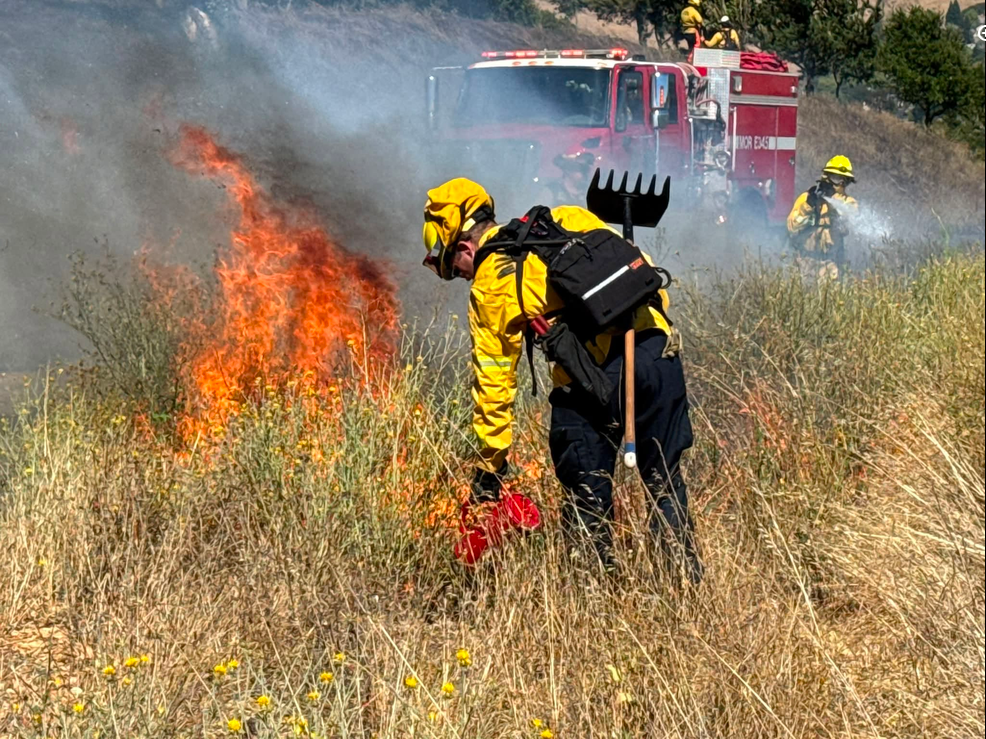
In addition to the citations, MOFD has performed four prescribed burn operations within its jurisdiction since May: Segora Te’ Land Trust (near Canyon), Orinda Oaks Park (Orinda), Mulholland Ridge Open Space (near Rheem Valley), and Carroll Ridge (above Rheem Valley near Moraga).
Prescribed burns are intended to reduce wildfire risk through low-intensity burns in order to treat combustible fuels in strategic areas. In doing so, the practice supports the establishment of natural fire cycles that contribute to a balanced ecosystem. It also helps to limit wildfire spread, restores native vegetation, and suppresses invasive species. These burns typically take place in the morning and conclude in the early afternoon. MOFD coordinates closely with the municipalities involved and the Bay Area Air Quality Management District to ensure that the projects are conducted safely and with minimal impacts to surrounding communities.
“As always, prescribed fire operations are dependent on weather, fuel conditions, air quality, available resources, and other operational conditions, so specific burn dates can change,” Isaacs stated. While MOFD occasionally conducts burn projects in the fall, there were none scheduled at the time of this printing.
Most residents have heard of the term Zone 0, which involves defensible space regulations pertaining to the first five feet around homes and structures. The state’s fire districts have been waiting nearly two years while the California Board of Forestry and Fire Protection conducted extensive outreach before coming to a final decision on whether to implement the mandate. The board is responsible for developing and overseeing forest policy and wildfire regulations in California, with a mission to protect the state’s forests, watersheds, and communities.
The board relied on research, public comment reviews, and nearly a combined 20 public workshops, community site visits, walking tours, on-the-ground homeowner engagement, fire professionals' input, as well as input from environmental groups, and local governments.
In an Aug. 19 press release, the Board of Forestry noted that professional experience and research indicate that homes are most vulnerable to ignition from embers within the first 5 feet outside of a home with particular attention to trees and other living vegetation. “The approved policy includes a phased-in implementation approach that prioritizes education and outreach over a 5-year period,” the press release noted. “While Zone 0 requirements will apply to new construction upon adoption of the regulation, existing homes and structures can implement actions in phases over time within different areas of Zone 0.”
Phase 1 (implemented within the first 3 years) will require the removal of combustible items such as firewood, dead leaves, branches, mulch, and wood chips within 5 feet of a structure. Also required will be keeping gutters clean, removal of dead or dying plants, trimming trees according to regulations, and adjusting for allowable vegetation.
Phase 2 (implemented within 5 years) will have local jurisdictions assign a timeline, within 5 years of the effective date of the regulations, for the “creation of an under-eave safety zone, replacing combustible gates, and making any necessary adjustments to sheds and fencing.”
The policy applies to homes only in the State Responsibility Area and Very High Fire Hazard Severity Zones in Local Responsibility Areas. Board Chair Terry O’Brien explained, “This isn’t a one-size-fits-all approach. We’ve built in flexibility so that local experts can tailor solutions unique to their individual communities while maintaining meaningful fire safety standards.”
Before becoming law, the adopted regulation package will be submitted to the Office of Administrative Law for review before official approval by the California Secretary of State.
“With respect to Zone 0, the regulations are new, and I am still evaluating how they will affect the Fire District and our existing requirements,” Isaacs stated. “I will be presenting this issue to the MOFD board so that the board and the public can better understand the requirements and potential impacts. Until that review is complete, I do not want to speculate exactly how or when the new regulations will affect Moraga and Orinda residents.”
Copyright 2026, Lamorinda Weekly